LifeCo is a traditional life insurance company that has historically sold policies through paper‑based application forms. As part of a broader digital transformation, the company aims to move policy discovery, cost estimation, and purchase online—targeting a new generation of digital‑first customers.
This design challenge explores how LifeCo could introduce a responsive e‑commerce mobile app that make insurance more approachable, transparent, and easy to understand, while maintaining trust in a category that is often perceived as complex and intimidating.
The focus of the challenge was not to digitise paper forms, but to rethink the insurance buying experience through clarity, progressive disclosure, and user‑centred design.
The Problem
Existing research highlighted two core customer challenges:
Users struggle to understand insurance products and terminology
Users find it difficult to estimate insurance costs with confidence
These issues often result in reliance on agents, delayed decision‑making, and reduced trust in online insurance experiences.
My Role : Lead Designer, Design Challenge
I led the end‑to‑end UX and UI design for this challenge, working independently while simulating real‑world product constraints. My responsibilities included problem definition, user journey mapping, ideation, user‑flow design, wireframing, and high‑fidelity UI design.
Throughout the process, I applied system‑level thinking, accessibility best practices, and responsive design principles to ensure the solution could scale across platforms and user needs. While this was a speculative project, design decisions were grounded in how enterprise‑level teams operate and make trade‑offs.
Timeline:5 days
The Challenge
Insurance is inherently complex, and LifeCo’s customers are accustomed to guided, paper‑based workflows. Moving this experience online introduced several key challenges:
Translating form‑heavy processes into a streamlined digital journey
Helping users understand policies well enough to decide independently
Designing for first‑time digital users while supporting more experienced ones
Balancing simplicity and clarity with legal and informational requirements
The core challenge was to design a self‑serve digital experience that reduces cognitive load, builds understanding progressively, and empowers users to estimate costs and start a life insurance application with confidence—without the need for in‑person or paper‑based support.
Process
I approached this challenge using a human‑centred design process, moving from understanding the problem space to validating a high‑fidelity solution within a constrained timeframe.
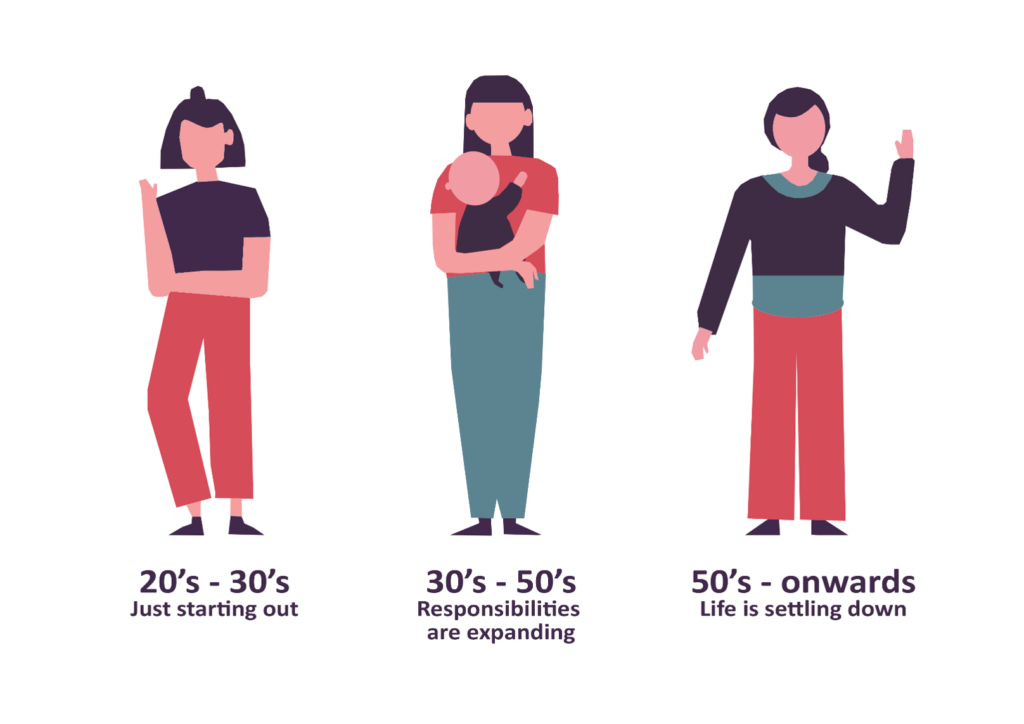
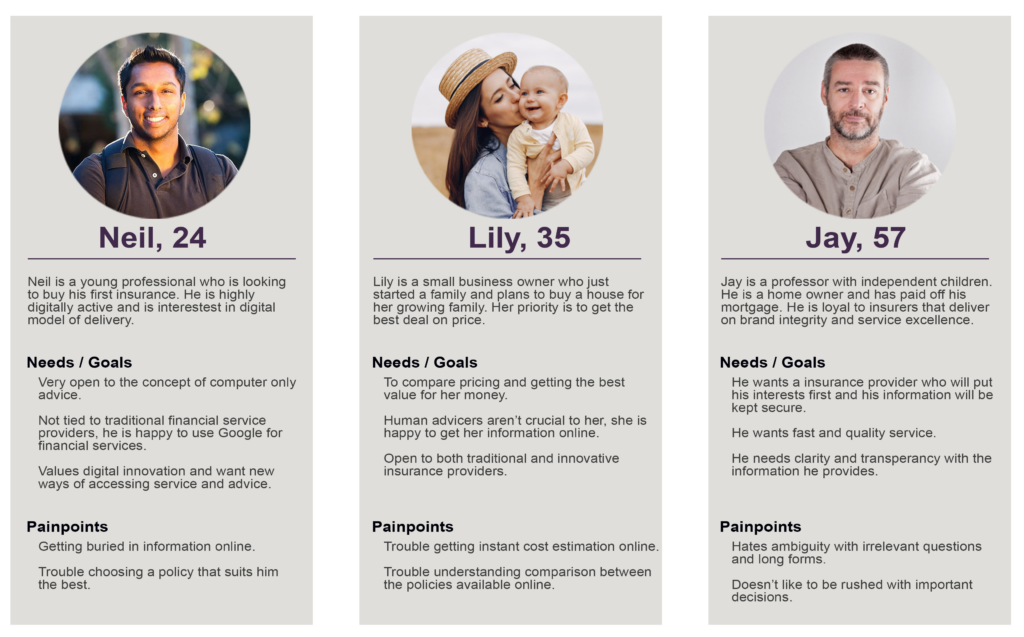
LifeCo serves a broad range of customers with varying levels of digital familiarity and financial literacy. Users interact with insurance products at different life stages and with different priorities, which influences how they research, compare, and purchase policies.
To ground the design in real user needs, I focused on understanding:
How users currently research and purchase insurance
What prevents them from completing insurance journeys online
Where confusion and mistrust occur in existing digital experiences
User Research
To validate assumptions and uncover pain points, I conducted:
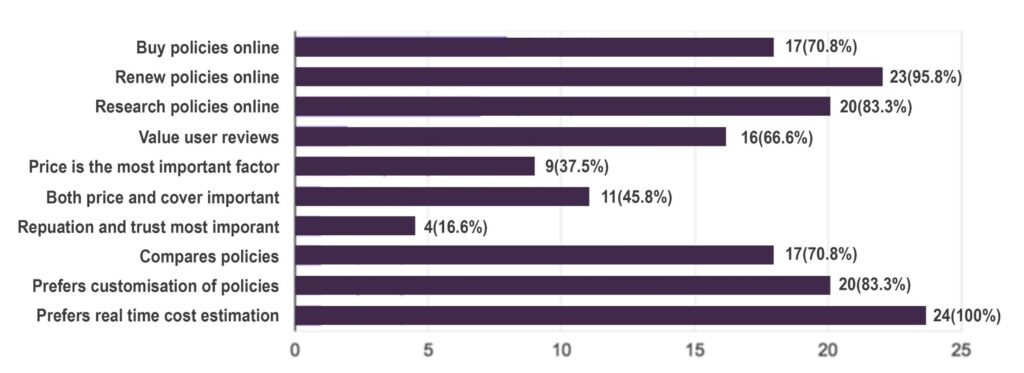
A survey (24 responses) to understand behaviours and attitudes toward buying insurance online
Three in‑depth interviews with users who had recently interacted with online insurance platforms
Key questions explored:
How users research life insurance
What factors influence trust and decision‑making
The biggest obstacles to buying insurance independently online
Key Research Insights
The research revealed several consistent themes:
Users are willing to spend time understanding insurance, but struggle with unclear language and terminology
Transparency is essential — ambiguity significantly reduces trust
Cost estimation tools often feel overwhelming or irrelevant
Users want detailed comparisons that clearly highlight differences between plans
Many users begin researching online, but rely on agents to finalise decisions
Insurance terminology remains challenging regardless of education or research experience
These insights formed the foundation for user needs and design priorities.
Defining the Problem
User Needs
Based on research synthesis, users need:
Clear explanations without industry jargon
Early and transparent cost estimation
Support in comparing policies meaningfully
Reassurance when making high‑stakes financial decisions
Problem Statement
“When purchasing life insurance online, users need clarity about coverage and instant cost estimation so they can make confident decisions without relying on agents.”
Concept & Approach
The core design strategy focused on:
Progressive disclosure to reduce cognitive overload
Guided self‑serve flows that mirror the reassurance of agent support
Comparison and estimation tools surfaced at the right moments
Accessibility‑first design to ensure inclusivity across user groups
I explored multiple layouts, flows, and interaction patterns through sketches and wireflows before converging on a solution that balanced simplicity with informational depth.
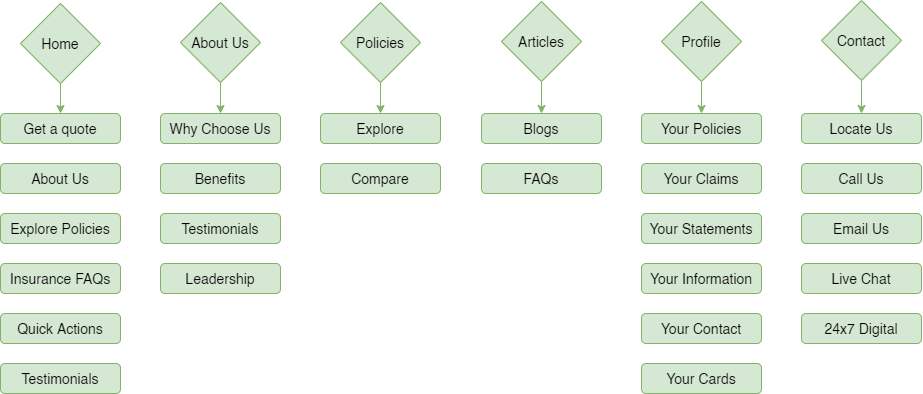
Information Architecture
The information architecture was designed to:
Prioritise discovery before commitment
Allow users to explore, compare, and estimate before entering personal details
Surface help and support without breaking the flow
Design Solution
Key Features
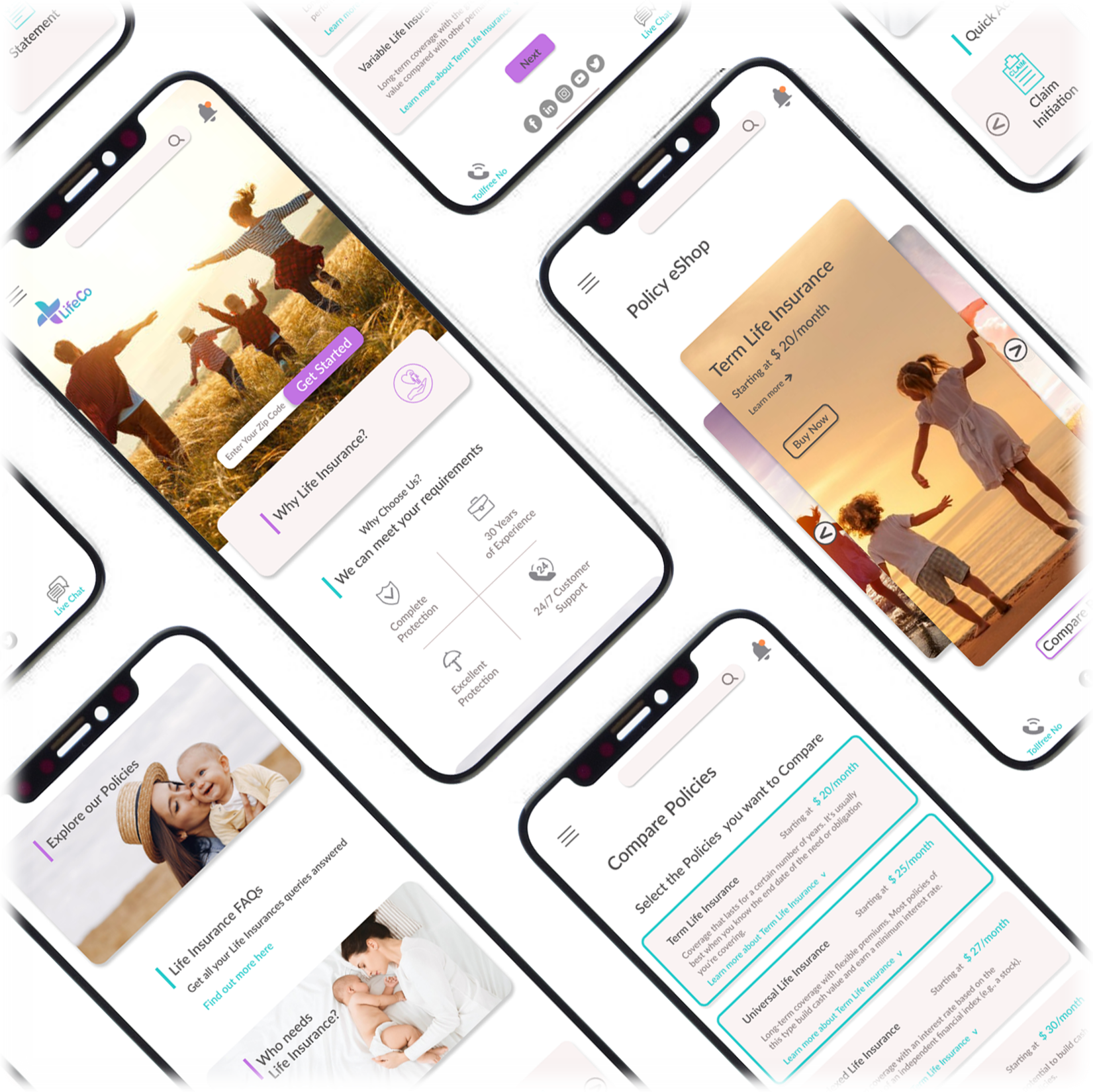
The final solution is a responsive web and mobile experience designed to support the full insurance journey.
Core features include:
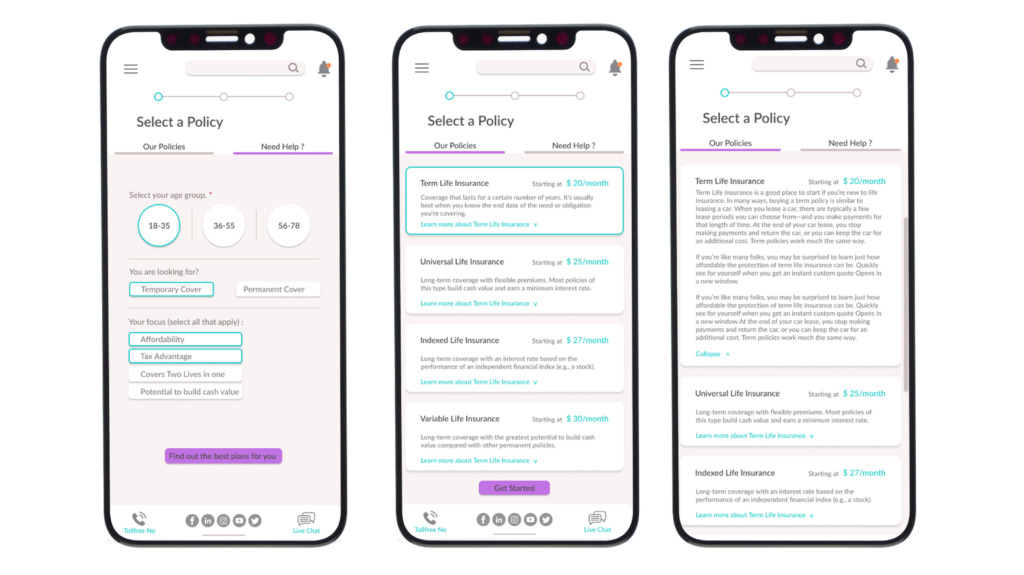
Clear product overviews with expandable details
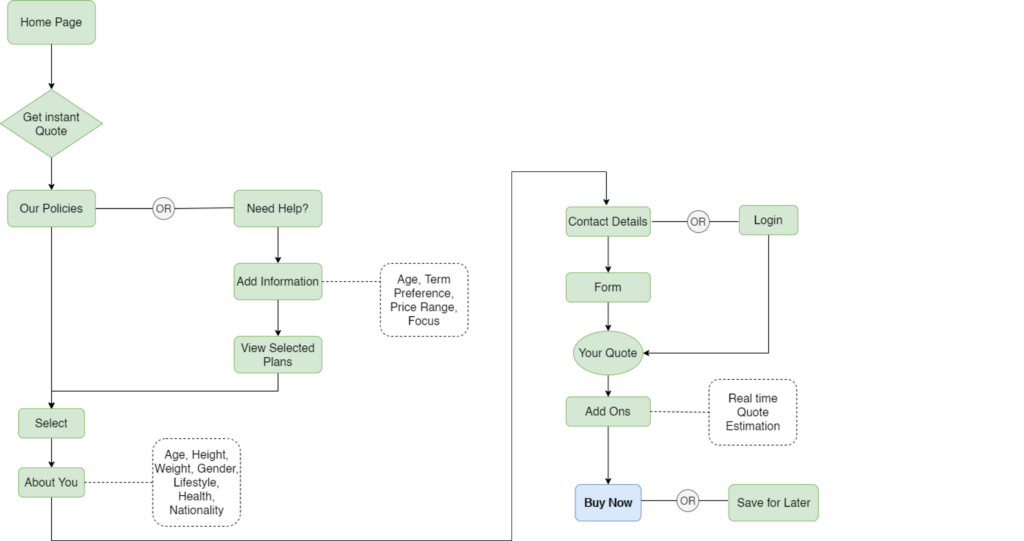
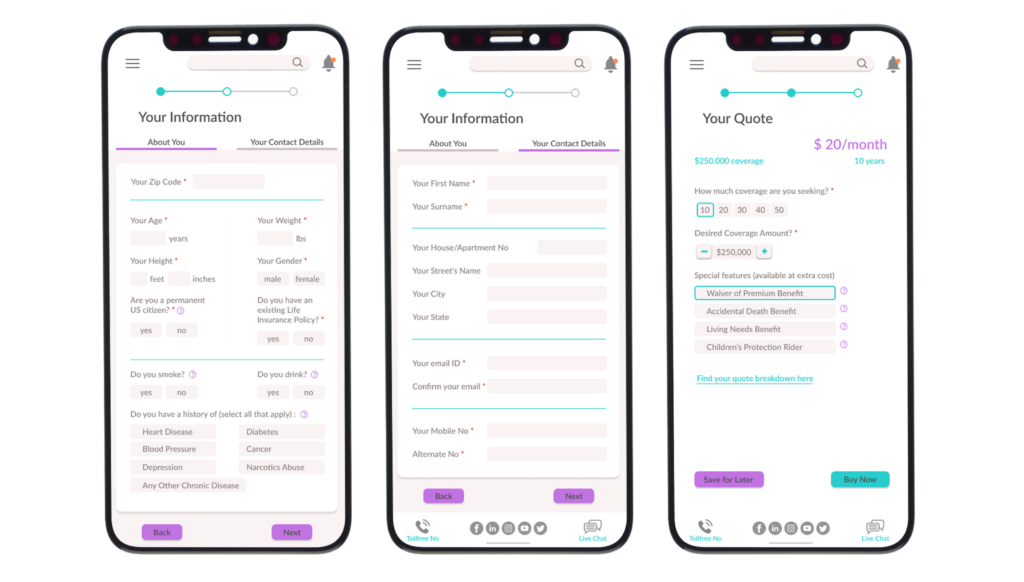
Instant quote and cost estimation with real‑time updates
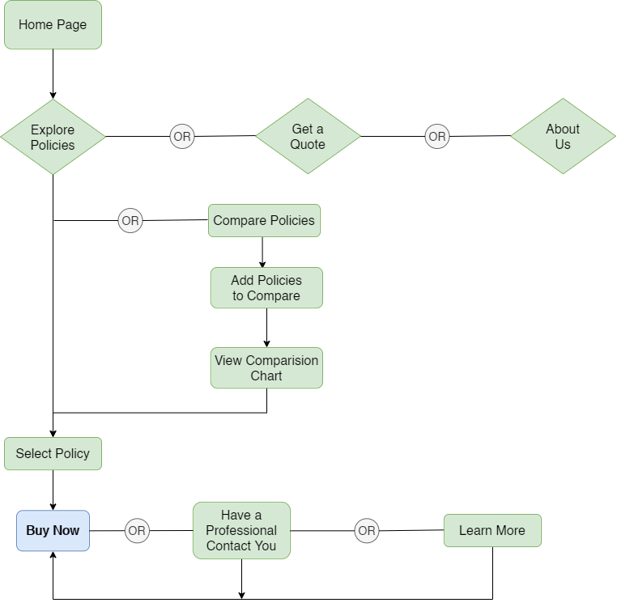
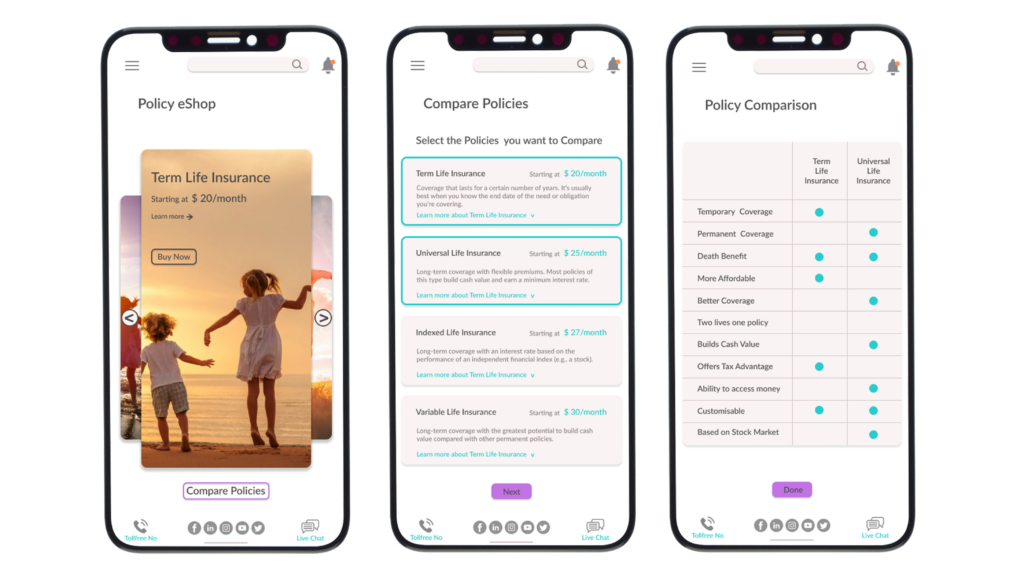
Policy comparison with side‑by‑side coverage breakdowns
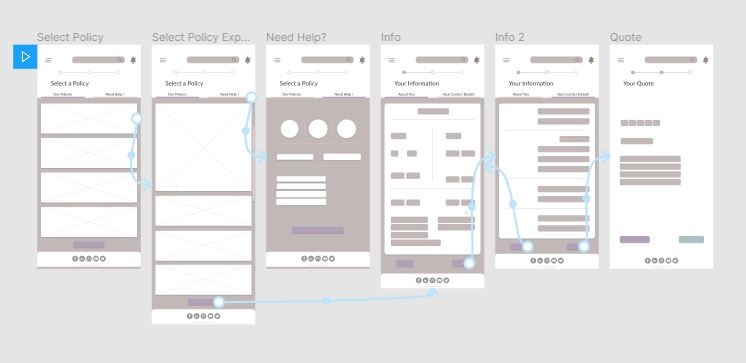
Guided application flow with progress indicators
Tooltips and contextual help for complex questions
Live support access (chat and contact options)
Secure checkout and online payment
User portal for policy management and documents
Cost Estimation Experience
The cost estimation flow was a critical focus area. It:
Asks only relevant questions
Updates pricing dynamically as users make selections
Uses progress indicators to reduce drop‑off
Provides explanations alongside inputs to build confidence
This approach helps users understand how their choices impact cost, rather than treating pricing as a black box.
Solution
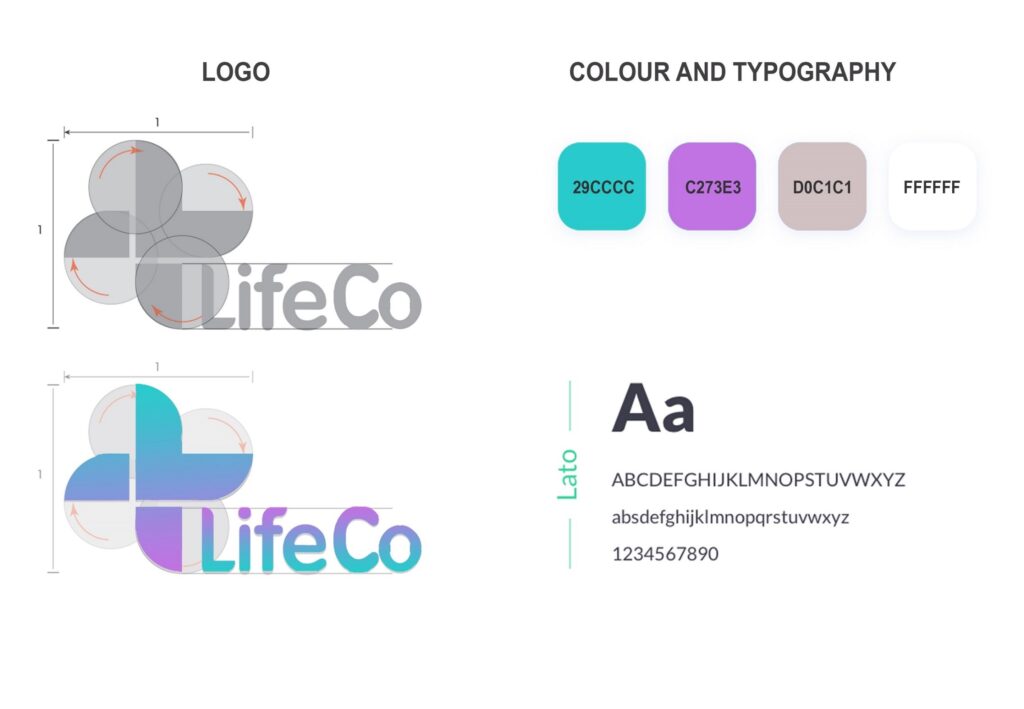
Colour and Typography
Prototype
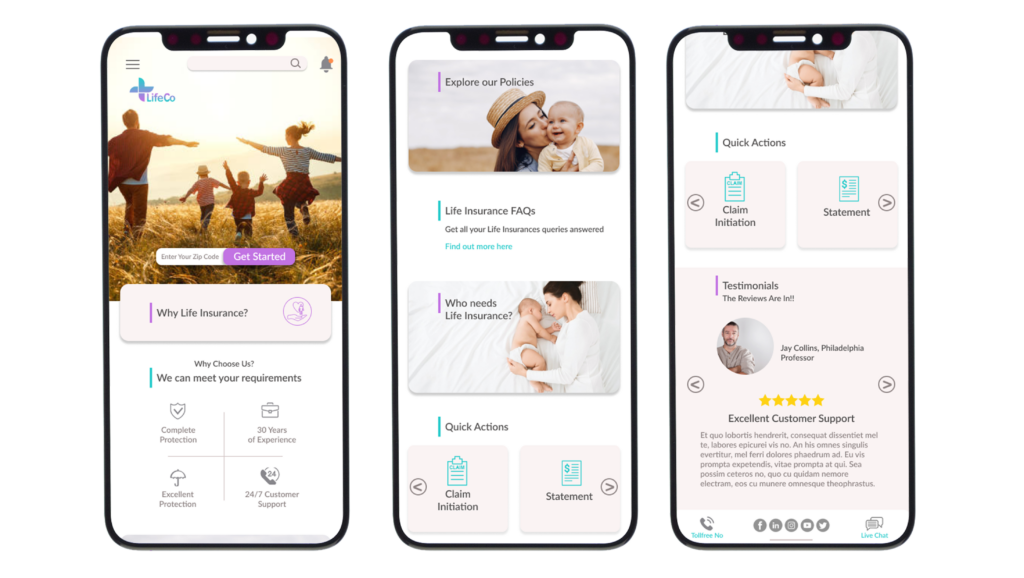
Home Screen
Browse and Compare Policies
Policies Selection Assistance
Instant Quote Generation
Testing & Validation
Usability Testing
The high‑fidelity prototype was tested with five users to evaluate:
Ease of understanding insurance information
Clarity of the cost estimation flow
Overall confidence in completing the journey independently
Results highlighted:
Improved clarity and reduced overwhelm
Positive feedback on progressive disclosure and tooltips
Increased confidence in estimating costs without agent support
Future Considerations
Given more time, the solution could be extended with:
AI‑powered chat support
Video consultations with agents
Smarter personalisation based on user behaviour
Enhanced micro‑interactions and motion feedback
Outcomes
This design challenge resulted in:
A complete end‑to‑end digital insurance experience
A clear, scalable framework for selling insurance online
Demonstrated translation of complex financial workflows into intuitive self‑serve journeys
A solution grounded in research, accessibility, and system‑level thinking
Reflections
Designing for financial confidence is as important as visual clarity
Progressive disclosure is critical when working with complex domains
Early synthesis helped keep decisions focused under tight timelines
This challenge reinforced the importance of aligning UX, trust, and business goals